Showing posts with label Europe. Show all posts

Thursday, 22 November 2012

Helmeted Guineafowl


Hunting season: 01.10-31.01

He Helmeted Guineafowl (Numida meleagris) is the best known of the guineafowl bird family, Numididae, and the only member of the genus Numida.

It breeds in warm, fairly dry and open habitats with scattered shrubs and trees such as savanna or farmland. Males often show aggression towards each other, and will partake in ravenous fighting which will leave other males bloodied and otherwise injured. Attempts at making themselves look fearsome is when their wings raise upwards from their sides and feathers bristle across the length of the body, or they may also rush forwards with a gaping beak. The nest is a well-hidden, generally unlined scrape and a clutch is normally 6-12 eggs which the female incubates for 26–28 days. Nests containing larger numbers of eggs are generally believed to be the result of more than one hen using the nest; eggs are large and an incubating bird could not realistically cover significantly more than a normal clutch. Domestic birds at least, are notable for producing extremely thick-shelled eggs that are reduced to fragments as the chicks hatch, rather than leaving two large sections and small chips from where any chick has removed the end of the egg. It has been noted that domesticated Guineahens are not the best of mothers, and will often abandon their nests. The chicks are cryptically coloured and rapid wing growth enables them to flutter onto low branches barely a week after hatching. These guineafowl live as long as 12 years in the wild.

The Helmeted Guineafowl is a large (53–58 cm) bird with a round body and small head. They weigh about 1.3 kg. The body plumage is gray-black spangled with white. Like other guineafowl, this species has an unfeathered head, in this case decorated with a dull yellow or reddish bony knob, and red and blue patches of skin. The wings are short and rounded, and the tail is also short. Various sub-species are proposed, differences in appearance being mostly a large variation in shape, size and colour of the casque and facial wattles.
This is a gregarious species, forming flocks outside the breeding season typically of about 25 birds that also roost communally. Guineafowl are particularly well-suited to consuming massive quantities of ticks, which might otherwise spread lyme disease.These birds are terrestrial, and prone to run rather than fly when alarmed. Like most gallinaceous birds, they have a short-lived explosive flight and rely on gliding to cover extended distances. Helmeted Guineafowl are great runners, and can walk 10 km and more in a day. They make loud harsh calls when disturbed. Their diet consists of a variety of animal and plant food; seeds, fruits, greens, snails, spiders, worms and insects, frogs, lizards, small snakes and small mammals. Guineafowl are equipped with strong claws and scratch in loose soil for food much like domestic chickens, although they seldom uproot growing plants in so doing. As with all of the numididae, they have no spurs.


Prices:

Numididae/01.10 - 31.01/ - 6 EURO


Tuesday, 18 September 2012

Fox


Hunting season: all year round

Distribution
The Red fox is found in prairies and semideserts, forests, steppes and forest steppes. You can see it in the suburbs and even in urban areas, living together with other small predators. This species is found everywhere in Bulgaria.

General information
The fur of the Red fox is rust coloured. It has white belly and black ears and legs. Its eyes are golden yellow and have distinctive vertically cut pupils like the cats. Its long shaggy tail, which has characteristic white tips, provides balance during jumps. The adult Red fox weighs 4.1/5.4 kg. Body length is 80/110 cm. Its size varies depending on habitat. In autumn and winter its fur is long and thick, and in spring until the end of the summer short.


Prices:

Fox – EUR 50

Monday, 10 September 2012

Common Quail


Hunting season: 15.08-30.11

The Common Quail, Coturnix coturnix, is a small bird in the pheasant family Phasianidae. It is widespread and is found in parts of Europe, (should not be confused with the domesticated Japanese Quail, Coturnix Japonica, original from Asia that although visually similar have very distinct calls).

It is a small (17 cm) rotund bird, essentially streaked brown with a white eyestripe, and, in the male, a white chin. As befits its migratory nature, it has long wings, unlike the typically short-winged gamebirds.
This is a terrestrial species, feeding on seeds and insects on the ground. It is notoriously difficult to see, keeping hidden in crops, and reluctant to fly, preferring to creep away instead. Even when flushed, it keeps low and soon drops back into cover. Often the only indication of its presence is the distinctive "wet-my-lips" repetitive song of the male. The call is uttered mostly in the mornings, evenings and sometimes at night. It is a strongly migratory bird, unlike most game birds.

Upon attaining an age of 6–8 weeks, this quail breeds on open arable farmland and grassland across most of Europe and Asia, laying 6-12 eggs in a ground nest. The eggs take from 16–18 days to hatch.


Prices: Quail (15.08.- 31.10.) - EUR 3


Saturday, 1 September 2012

The Common Snipe


Hunting season: 15.08-28.02

The Common Snipe (Gallinago gallinago) is a small, stocky wader native to the Old World. The breeding habitat is marshes, bogs, tundra and wet meadows throughout northern Europe and northern Asia. It is migratory, with European birds wintering in southern and western Europe and Africa (south to the Equator), and Asian migrants moving to tropical southern Asia.

Adults are 25–27 cm in length with a 44–47 cm wingspan and a weight of 80–140 g (up to 180 g pre-migration). They have short greenish-grey legs and a very long (5.5–7 cm) straight dark bill. The body is mottled brown with straw-yellow stripes on top and pale underneath. They have a dark stripe through the eye, with light stripes above and below it. The wings are pointed.

It is the most widespread of several similar snipes. It most closely resembles the Wilson's Snipe G. delicata of North America, which was until recently considered to be a subspecies G. g. delicata of Common Snipe. They differ in the number of tail feathers, with seven pairs in G. gallinago and eight pairs in G. delicata; the North American species also has a slightly wider white edge to the wings. Both species breed in the Aleutian Islands.[2] It is also very similar to the Pin-tailed Snipe G. stenura and Swinhoe's Snipe G. megala of eastern Asia; identification of these species there is complex.

There are two subspecies of Common Snipe, G. g. faeroeensis in Iceland, the Faroes, Shetland and Orkney(wintering in Britain and Ireland), and G. g. gallinago in the rest of the Old World.


Prices:

Gallinago gallinago/14.08-01.03/ -3 EURO

Thursday, 30 August 2012

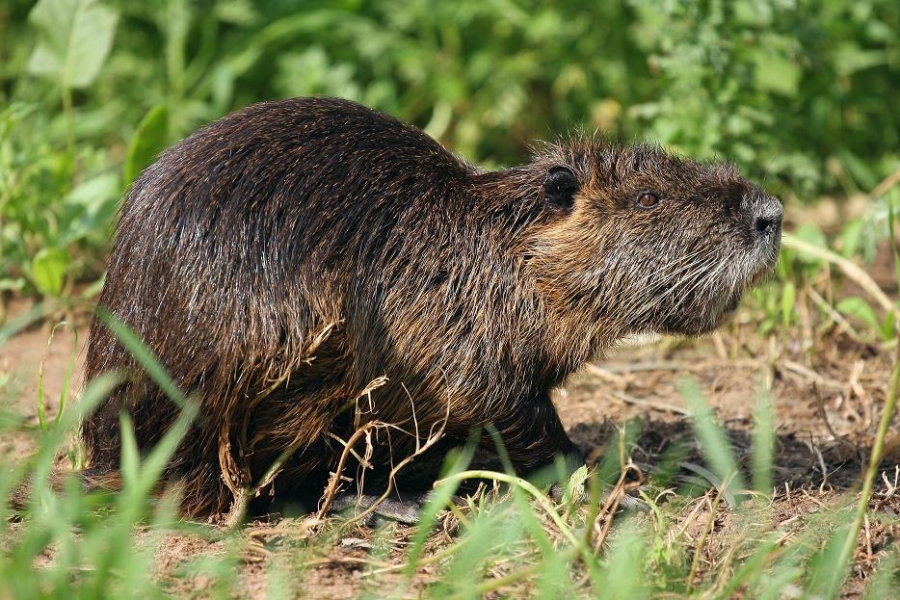
The Coypu


Hunting season: 01.11-28/29.02


The coypu (Myocastor coypus), also known as the river rat, and nutria is a large, herbivorous, semiaquatic rodent and the only member of the family Myocastoridae. Originally native to subtropical and temperate South America, it has since been introduced to North America, Europe, Asia, and Africa, primarily by fur ranchers. Although it is still valued for its fur in some regions, its destructive feeding and burrowing behaviors make this invasive species a pest throughout most of its range.

There are two commonly-used names in the English language for Myocastor coypus. The name nutria is generally used in North America and Asia; however, in Spanish-speaking countries, the word nutria refers to the otter. To avoid this ambiguity, the name coypu (derived from the Mapudungun language) is used in Latin America and Europe.

Coypus live in burrows alongside stretches of water. They feed on river plants, and waste close to 90% of the plant material while feeding on the stems.

Prices:

Coypu Myocastor coypus/01.11-01.03/ - 15 EURO

Tuesday, 28 August 2012

Brown Bear


Hunting season: 01.09 - 30.12

The brown bear (Ursus arctos) is a relatively rare animal, placed under the protection of the Bulgarian law. Its hunting is limited and requires a special permission. We can offer you the opportunity to go hunting for this rare animal due to Hunting in Bulgaria's good relations with hunting reserves, authorized to perform it.

Hunting brown bears is a true challenge for every hunter. Adult animals weigh from 200 kg up to 300 kg. Despite their clumsy appearance they are fast, intelligent and strong.

The brown bear's pelt is desired trophy. In order to acquire it, we recommend hunting with a bait. This method has the highest success rate during the spring. After the winter hibernation the animals are actively seeking food to replenish its supply.

The import of trophies from brown bear (skin and skull) from Bulgaria in the EU is permitted. For this purpose, you need the issuance of CITES certificate. Information about that you can get from us. We will fulfill these formalities instead of you. In terms of hunters, the population of the brown bear in Bulgaria is very good. But the brown bear is widely distributed in
certain mountainous areas and not many areas have licenses for them. That's the reason hunting areas to try selling only big trophies and about 400 CIC.

Prices:

BROWN BEAR – Ursus Arctos L. 
Trophy (the fur according to CIC)
To 300 pts CIC -    EUR 4.500
from 300 pts CIC - EUR 4.500 + EUR 40 for each 1 pt CIC
from 350 pts CIC - EUR 6.500 + EUR 45 for each 1 pt CIC
from 400 pts CIC - EUR 8.750 + EUR 80 for each 1 pt CIC
Wounded brown bear – payable 50% of the size of the trophy booked by the hunter.

Sunday, 26 August 2012

Rock Partridge


Hunting season: 01.10-30.11


The Rock Partridge, Alectoris graeca, is a gamebird in the pheasant family Phasianidae of the order Galliformes, gallinaceous birds.

This partridge has its main (native) range in southwestern Asia and southeastern Europe, and is closely related and very similar to its eastern equivalent, theChukar Partridge, A. chukar.
This is a resident breeder in dry, open and often hilly country. It nests in a scantily lined ground scrape laying 5-21 eggs. The Rock Partridge takes a wide variety of seeds and some insect food.

The Rock Partridge is a rotund bird, with a light brown back, grey breast and buff belly. The face is white with a black gorget. It has rufous-streaked flanks and red legs. When disturbed, it prefers to run rather than fly, but if necessary it flies a short distance on rounded wings.

It is very similar to the Chukar Partridge, but is greyer on the back and has a white, not yellowish foreneck. The sharply defined gorget distinguishes this species from Red-legged Partridge. The song is a noisy ga-ga-ga-ga-chakera- chakera- chakera.

This species is declining in parts of its range due to habitat loss and over-hunting. While it generally manages to hold its own, the status of the Sicilianpopulation may be more precarious and certainly deserves attention.


Rock Partridge Alectoris Graeca Cirpiotes - 15 EURO

Friday, 24 August 2012

Hare


Hunting season: 01.10-31.12

Hares and jackrabbits are leporids belonging to the genus Lepus. Hares less than one year old are called leverets. Four species commonly known as types of hare are classified outside of Lepus: the hispid hare (Caprolagus hispidus), and three species known as red rock hares (Pronolagus spp.).

Hares are very fast-moving. The European brown hare (Lepus europaeus) can run at speeds of up to 72 km/h (45 mph). They live solitarily or in pairs, while a "drove" is the collective noun for a group of hares. Their bodies are capable of absorbing the g-force produced while running at extreme speeds or while escaping predators.

A common type of hare in Arctic North America is the snowshoe hare, replaced farther south by the black-tailed jackrabbit, white-tailed jackrabbit, and other species.

Normally a shy animal, the European brown hare changes its behavior in spring, when hares can be seen in broad daylight chasing one another around meadows; this appears to be competition between males to attain dominance (and hence more access to breeding females). During this spring frenzy, hares can be seen 
"boxing"; one hare striking another with its paws (probably the origin of the term "mad as a March hare"). For a long time it had been thought that this was inter-male competition, but closer observation has revealed that it is usually a female hitting a male to prevent copulation.


Hare (Hunting period 01.10.- 31.12.) - EUR 30

Monday, 20 August 2012

Wild Turkey


                               Hunting season: 01.10-01.03 


 The Wild Turkey (Meleagris gallopavo) is native to North America and is the heaviest member of the Galliformes. It is the same species as the domestic turkey, which derives from the South Mexican subspecies of wild turkey.

 Adult wild turkeys have long reddish-yellow to grayish-green legs and a black body. Males, called toms or gobblers, have a large, featherless, reddish head, red throat, and red wattles on the throat and neck. The head has fleshy growths called caruncles. When males are excited, a fleshy flap on the bill expands, and this, the wattles and the bare skin of the head and neck all become engorged with blood, almost concealing the eyes and bill. The long fleshy object over a male's beak is called a snood. When a male turkey is excited, its head turns blue; when ready to fight, it turns red. Each foot has three toes, and males have a spur behind each of their lower legs. Male turkeys have a long, dark, fan-shaped tail and glossy bronze wings. As with many other species of the Galliformes, turkeys exhibit strong sexual dimorphism. The male is substantially larger than the female, and his feathers have areas of red, purple, green, copper, bronze, and gold iridescence.

 Females, called hens, have feathers that are duller overall, in shades of brown and gray. Parasites can dull coloration of both sexes; in males, coloration may serve as a signal of health. The primary wing feathers have white bars. Turkeys have 5000 to 6000 feathers. Tail feathers are of the same length in adults, different lengths in juveniles. Males typically have a "beard", a tuft of coarse hair (modified feathers) growing from the center of the breast. Beards average 9 inches (230 mm) in length. In some populations, 10 to 20 percent of females have a beard, usually shorter and thinner than that of the male. The adult male normally weighs from 5 to 11 kg (11–24 pounds) and measures 100–125 cm (39–49 in) in length. The adult female is typically much smaller at 2.5–5.4 kg (5.5–12 lb) and is 76 to 95 cm (30–37 in) long. The wings are relatively small, as is typical of the galliform order, and the wingspan ranges from 1.25 to 1.44 m (49–57 in). The record-sized adult male Wild Turkey, according to the National Wild Turkey Federation, weighed 38 lb (17.2 kg).


Prices:

For shot turkey – EUR 30

Friday, 17 August 2012


Hunting season: 14.08-28.02


The Eurasian Woodcock, Scolopax rusticola, is a medium-small wading bird found in temperate and subarctic Eurasia. It has cryptic camouflage to suit its woodland habitat, with reddish-brown upperparts and buff-coloured underparts. Its eyes are set far back on its head to give it 360-degree vision and it probes in the ground for food with its long, sensitive bill, making it vulnerable to cold weather when the ground remains frozen.

The male performs a courtship flight known as 'roding' at dusk in spring. When threatened, the female can carry chicks between her legs, in her claws or on her back while flying, though this is rarely witnessed. The world population is estimated to be 15 million to 16 million birds.

Adults are 33–38 centimetres (13–15 in) in length, including the 6–8 centimetres (2.4–3.1 in) long straight bill, and have a 55–65 centimetres (22–26 in) wingspan. The Eurasian Woodcock has cryptic camouflage to suit its woodland habitat, with intricately patterned reddish-brown upperparts and buff underparts. The head is barred with black, not striped like that of its close relatives, the snipe. It has large eyes located high on the sides of its head, giving it 360-degree monocular vision.

The wings are rounded and the base of the bill is flesh-coloured with a dark tip. The legs vary from grey to pinkish. The species is sexually dimorphic, with the male much larger than the female, although the sexes cannot be separated in the field.


Woodcock Scolopax Rusticola: /15.08-28.02/: 20 EURO

Tuesday, 14 August 2012

Small Game: Beech Marten

Hunting in Bulgaria


Hunting season: all year round


The beech marten (Martes foina), also known as the stone marten or white breasted marten, is a species of marten native to much of Europe and Central Asia, though it has established a feral population in North America. It is listed as Least Concern by the IUCN on account of its wide distribution, its large population, and its presence in a number of protected areas. It is superficially similar to the pine marten, but differs from it by its smaller size and habitat preferences ; while the pine marten is a forest specialist, the beech marten is a more generalist and adaptable species, occurring in a number of open and forest habitats.


Prices:  Marten Martes Fiona: 6 EURO